Bitcoin has no physical form. You can’t hold it in your hand, and no government or central bank promises to back it. Yet it is indeed bought and sold in the market at real prices, and those prices often appear in the news. So many people ask the same question: What exactly makes it valuable?
The answer to this question is not simply “because people are speculating.” To explain it clearly, we first need to do one thing: separate “price” from “value.” Then we need to look at what rules Bitcoin embedded in its design, and how those rules interact with human behavior to form the trust people have in it today.
This article will follow this line of thought: first distinguish price from value, then discuss scarcity, the trust brought by decentralization, and the consensus formed by network usage, and finally clarify several common misconceptions. Reading this article requires no technical background; you only need to know that Bitcoin is a digital currency that runs on the internet.
First, Distinguish: Bitcoin’s “Price” and “Value” Are Not the Same Thing
Price is the current transaction quote in the market. It is determined by supply and demand from buyers and sellers, and is also affected by liquidity (whether you can smoothly complete a trade when you want to buy or sell without significantly affecting the price) and sentiment. So price can fluctuate wildly in a short time: up 20% today, down 40% next month—this itself is not surprising.
Value answers a different question: why some people are willing to hold it, use it, and accept it over the long term. This is a more fundamental reason that changes more slowly.
These two things are often confused. When the price rises, people say “value has been proven”; when the price falls, they say “it has no value at all.” Both lines of reasoning are flawed.
Consider other assets. Gold has some industrial uses, but its status as a store of value comes mainly from scarcity, durability, and a consensus formed over thousands of years, not because it is so useful. A piece of art has almost no practical use, yet its price can be very high, relying on scarcity, identifiability, and shared market recognition. Stocks at least have expectations of future cash flows from a company, but they too have no “physical” substance.
These examples illustrate one thing: something can command a price in the market without needing a physical entity or a government behind it. The reverse is also true—just because something has a solid value foundation does not mean its price won’t plummet.
What the following sections will explain is precisely what constitutes Bitcoin’s “value foundation.”
21 Million: Why Bitcoin’s Scarcity Matters
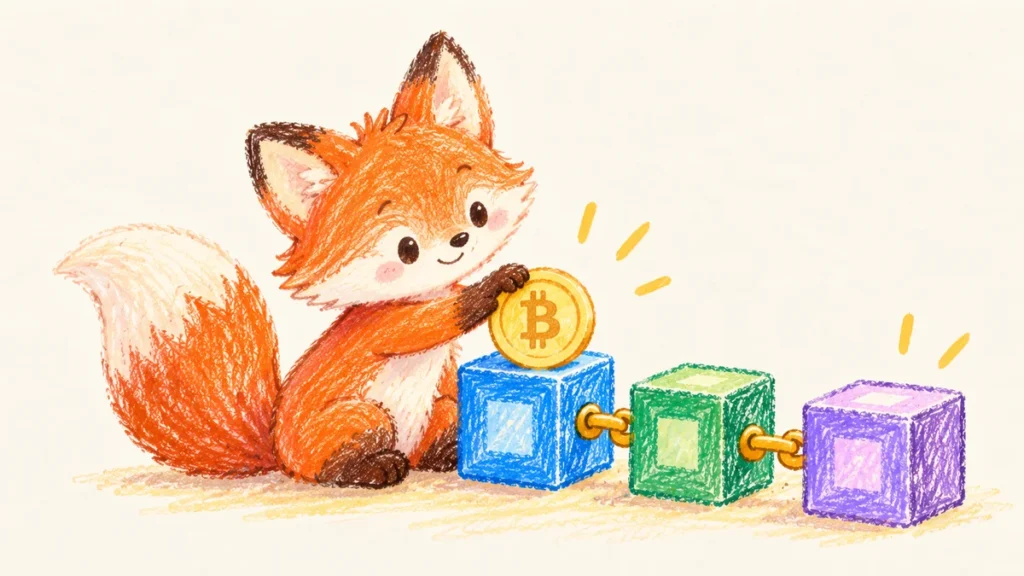
Before discussing scarcity, let’s briefly review some background. Bitcoin runs on a decentralized ledger: transaction records are not kept by a single bank or company, but by many participants distributed around the world, each maintaining the same ledger. Anyone who wants to alter the records must get others to accept the altered version, not just change the file in their own hands. This mechanism is the foundation for the discussion of “trust” later; just keep this in mind for now.
Bitcoin’s issuance rules are written into this protocol. New bitcoins can only be created through “block rewards”: whenever the network confirms a batch of new transactions (i.e., forms a “block”), the protocol creates a certain number of new bitcoins and rewards them to the participants who help maintain the network. The protocol also stipulates that this reward halves approximately every 210,000 blocks, which is about four years at the average block production rate. With each halving, the rate of new bitcoin creation continues to decline, and the total supply will ultimately not exceed 21 million.
The key point is that this is not “someone promising not to issue more.” Participants in the network run the same set of rules; if anyone tries to issue extra, others will simply reject it. To change the rules, the vast majority of the network must agree simultaneously, which is exactly the opposite of the decentralized design direction.
Let’s use a simplified numerical example to feel the supply difference. Suppose there are two assets, A and B, each with an initial 10 million units. A increases its supply by 10% each year, while B’s total supply is forever fixed at 10 million. After ten years, A’s total supply is about 25.94 million, while B remains at 10 million. If demand for both remains unchanged, then each unit of A can typically exchange for less over time due to dilution; B does not suffer this.
(This is just an example with numbers to demonstrate the impact of supply changes; it does not represent any real asset.)
Fiat currency can serve as a contrast. The supply of fiat money is not fixed; monetary authorities adjust it according to policy. When the money supply grows faster than goods and services, the same amount of money buys less, meaning purchasing power is diluted. For some people, an asset with transparent issuance rules, a capped total supply, and no single institution deciding its fate is therefore attractive.
However, we must add one thing: scarcity itself does not create value. Something with a fixed total supply but that nobody wants still has a price of zero. Scarcity only means “it won’t be diluted”; it must be combined with demand, security, and a usable network to potentially form value. This point will recur in later sections.
Without a Central Bank, Why Should Anyone Trust Bitcoin?
Who Maintains This Network
The Bitcoin network is maintained by many nodes around the world. Each node keeps a copy of the ledger, checks whether transactions comply with the rules, and propagates valid transactions to other nodes. No single machine or institution can unilaterally decide the contents of the ledger. This is the practical meaning of “decentralization”: power is dispersed, and any party needs the cooperation of others.
Decentralization is often misunderstood as “no rules.” The truth is the opposite: Bitcoin’s rules are quite strict and apply equally to all participants. Decentralization only changes “who enforces the rules”—not a single institution having the final say, but each node verifying independently.
Public Ledger: Anyone Can Verify
The ledger is public. Anyone can check whether a particular transfer exists and how much bitcoin an address holds. You don’t need to apply for permission, nor do you need to trust a third party’s conclusion; you can verify it yourself.
This is crucial: in the traditional financial system, to confirm whether a transfer has arrived, you usually need to trust what the bank, payment institution, or clearing system says. In Bitcoin, “whether this transaction is valid” can be independently checked by anyone.
What Does It Cost to Tamper?
Verification has a cost, but the cost of modification is much higher.
Bitcoin uses “Proof of Work” to determine who has the right to append the next block to the ledger. Participants must expend substantial computational resources to compete for this right; the winner broadcasts the new block, and others verify and accept it. Blocks are added one after another, forming a chain.
Suppose someone wants to alter a confirmed transaction. They cannot just change the ledger in their own hands, because others will not accept it. They would need to recalculate that block and all subsequent blocks, and continuously outpace the other honest participants in computational speed, in order for their version to be accepted. As a transaction is covered by more and more subsequent blocks, the cost of overturning it rises rapidly.
So “immutability” is more accurately described as: not physically impossible, but so costly as to be almost impractical. This is an economic guarantee based on cost, not an absolute impossibility.
Rules Are Enforced by Code
Bitcoin’s issuance and transfer rules are written into the program and enforced by nodes in the network according to the same set of rules. These rules do not depend on the promise of a person or institution, nor will they change at someone’s whim. They are predictable and inspectable. This in itself is part of the source of its trust.
Consensus and Network Effects: Why the More People Use It, the More Stable Its Value
All Currencies Rely on Some Form of Trust
Paper money itself has almost no use value. A banknote cannot be eaten or used; its purchasing power comes from several sources: its legal tender status, the requirement that taxes be paid in it, and enough people willing to accept it. In other words, the value of fiat money is also built on trust and mutual acceptance, except that the object of trust is the state.
We must not overstate the analogy. Fiat money is backed by a sovereign state, legal enforcement, and tax support; Bitcoin has none of these. Their foundations of trust are different, and we cannot conclude that they are equally reliable just because “both require trust.”
Bitcoin’s trust comes from elsewhere: transparent issuance rules, a supply cap written into the protocol, a publicly verifiable ledger, extremely high tampering costs, and all of this without requiring you to trust any specific institution or individual. You trust the rules and mechanisms, not a promise.
Network Effects
The more people use and accept something, the more useful it often becomes to each person. The telephone is a classic example: when only one person has a phone, it is not very useful; the more people who have one, the more people you can reach, and the greater its value.
Bitcoin has a similar effect. The more people accept it and the more active transactions are, the more useful it becomes as a tool for transfer and store of value, and the better its liquidity; these in turn attract more users. This self-reinforcing process is commonly called a network effect.
But we must understand its limits: network effects do not mean the price only goes up. Adoption can grow, but it can also stagnate or even reverse. If fewer people use it, fewer merchants accept it, or the regulatory environment tightens, this cycle can also run in reverse.
The Most Common Misconceptions About Bitcoin’s Value
Misconception 1: No Government Backing Means No Value
Gold has no government backing, nor does art, yet both have market value. Government backing is one source of value, but not the only one. Scarcity, security, verifiability, and mutual acceptance can all support value. The accurate statement is: government backing can enhance an asset’s value, but it is not required for something to have value.
Misconception 2: A High Price Proves Value
Price is determined by supply and demand from buyers and sellers, and in the short term is also significantly affected by sentiment, liquidity, and capital flows. A price rise in itself does not constitute evidence that value is confirmed, nor does a price fall constitute evidence that value is refuted. Using short-term price to argue for or against value is not rigorous on either side.
Misconception 3: A Fixed Supply Means the Price Must Rise
This is the most common one. Scarcity only means the supply won’t be diluted; it does not mean demand will necessarily exist or grow. Price is determined by both demand and supply. There are many things with limited issuance, but there are also many whose price is zero. If no one wants it, scarcity is of no use.
Misconception 4: Bitcoin and Gold Are Exactly the Same
Gold has a physical form, has practical uses in industry and jewelry, and has been accepted by humans as money and a store of value for thousands of years. Bitcoin has no physical use, has a much shorter history, and is more volatile in price. Its advantages lie in being easy to divide, convenient for cross-border transfer, and easy to verify authenticity. It shares some attributes with gold, but it is not the same kind of thing, and one cannot directly apply gold’s thousands of years of historical consensus to it.
Bitcoin Is Valuable, But How Much Is Determined by the Market
Back to the original question. Bitcoin’s value foundation is roughly composed of several parts:
First, scarcity. The cap on total supply and the predictable issuance schedule mean it won’t be arbitrarily diluted.
Second, credible records brought by decentralization. Decentralized nodes, a public ledger, and proof of work make the credibility of the records independent of any institution’s credit, relying instead on a mechanism that anyone can check and that is extremely costly to tamper with.
Third, shared consensus formed by transparent rules. Issuance and transfer rules are enforced by code, predictable and verifiable, and combined with the scale of the network, they form the reason people are willing to hold and use it.
These characteristics give Bitcoin the potential for value storage and global transfer. But note: they explain “what makes it valuable,” not “how much it is worth now.”
Market price answers a different question. It is determined by supply and demand, liquidity, market sentiment, the regulatory environment, and macroeconomic conditions, and in the short term can deviate significantly from anyone’s assessment of the value foundation. The value foundation changes slowly, while price changes quickly; the two are related but not the same thing.
So a more reliable way to understand it is: the value foundation determines “why some people are willing to hold and use it long-term,” while the market price determines “what price buyers and sellers are willing to transact at right now.” As for whether an individual should buy, that depends on their own risk tolerance and judgment; this article does not provide any investment conclusions.