Ethereum’s mainnet was once famous for being “absurdly expensive”: at peak times, a simple transfer could cost tens of dollars. Many people have heard of Arbitrum, Optimism, and Base, and know that they can be much cheaper, but they are not quite sure how these networks relate to Ethereum mainnet—are they another new public blockchain, or some kind of extension of mainnet? This article aims to answer exactly that question: when Ethereum mainnet becomes expensive and congested, what does L2 actually solve, and what key trade-offs should users understand?
First, understand why Ethereum became expensive and congested
To understand the value of L2, you first need to understand the problem it is trying to solve.
Block space is a scarce resource
Ethereum is a blockchain, and transactions are recorded in “blocks”; only once a transaction is packed into a block is it truly on-chain. The number of transactions each block can hold is limited—because each block has caps on size and computation.
You can think of mainnet as a highway with only a few lanes: capacity is fixed, and no matter how many cars want to get on, only so many can pass at once. Block space is scarce, and this is the premise for understanding everything that follows.
Why every transaction must be verified by the whole network
Someone might ask: if it is congested, why not open more lanes and make blocks bigger?
The issue is that Ethereum’s design goal is to balance decentralization, security, and scalability. For nodes around the world to independently verify every transaction, mainnet blocks cannot grow without limit—otherwise running a node would become increasingly expensive, fewer people could participate in verification, and decentralization would decline.
In other words, every mainnet transaction needs to be repeatedly verified by a large number of nodes so that the global state remains consistent and credible. The price of this security is a ceiling on capacity.
Why gas fees rise
With that background, the logic behind rising gas fees becomes straightforward:
- Block space is limited.
- As more people want to get on-chain, competition forms.
- People are willing to pay higher fees to gain priority.
- As a result, gas fees are pushed up.
High fees and congestion are not some single point of failure; they are the scalability bottleneck Ethereum faces in pursuing security and decentralization. This is exactly where L2 sets out to help.
The core idea of L2: move execution out, bring results back to mainnet
Since every mainnet transaction is expensive, a natural thought is: can most of the work be done outside mainnet?
What is L2?
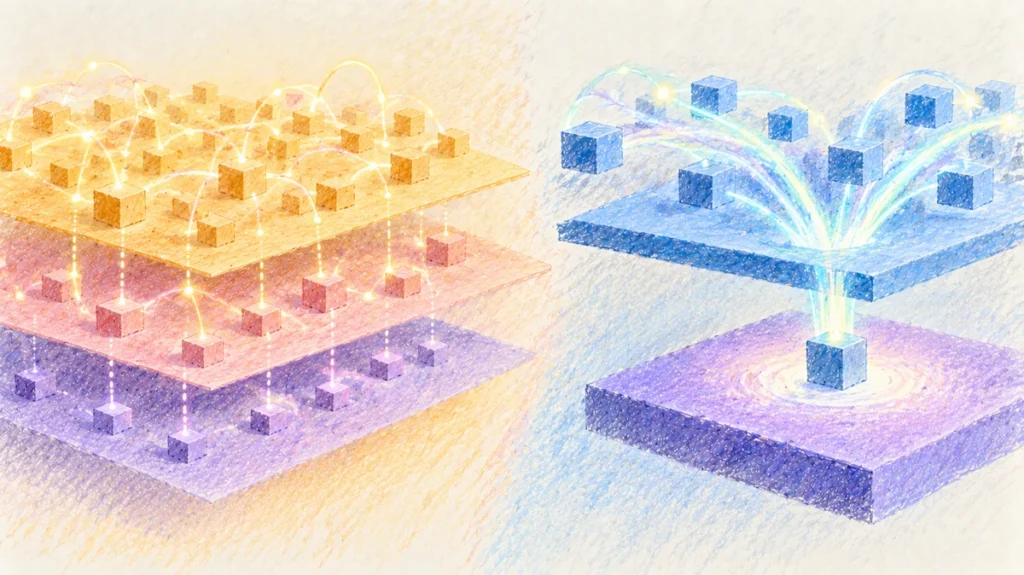
L2, or Layer 2, is an extension network built on top of Ethereum mainnet (L1). Users can initiate transactions directly on L2 and enjoy lower fees and faster speeds.
Its relationship with mainnet can be understood this way: mainnet is the final “settlement layer” and security anchor, while L2 handles the “execution” of a large volume of everyday transactions.
Separating execution from settlement
This is the most important sentence for understanding L2: move execution outside mainnet, then bring the results back to mainnet.
More concretely, the general process looks like this:
- A user initiates and completes a transaction on L2.
- L2 nodes process a large number of such transactions.
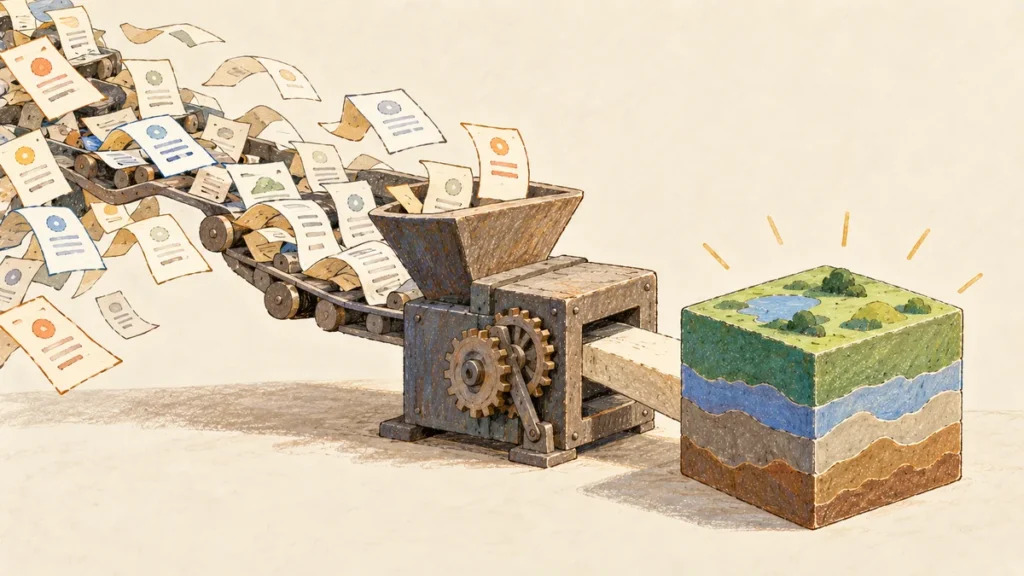
- L2 compresses and batches these transactions into a single batch and submits it to Ethereum mainnet.
- Mainnet does not re-execute these transactions one by one; instead, it verifies and records key data or validity proofs.
The key point is that mainnet does not need to handle every small task itself; it only needs to confirm that the final result is credible and then lock it in. Think of a triage desk—many simple tasks are handled at the desk first, and only the summary record is sent to the main service counter; the main counter does not need to process every small task itself.
Why this makes things cheaper
Because costs are shared.
Mainnet processes only one batch of data, but behind that batch are thousands of L2 transactions. The high mainnet cost that each transaction would otherwise have to pay is now shared across the batch, so the per-transaction fee naturally drops substantially, while overall throughput increases.
It is worth emphasizing: L2 does not detach from mainnet. It still relies on mainnet as the final settlement layer; it has simply moved the execution step outside.
Rollups: the main L2 scaling path today
Earlier we said that L2 “brings results back to mainnet.” But why should mainnet trust that the results submitted by L2 are correct? This is exactly the problem Rollups are designed to solve.
What Rollups do
Rollups are the most important L2 approach in the current Ethereum ecosystem. They package many transactions into a batch and submit only compressed data and state changes to mainnet. Because the data is compressed, the amount mainnet has to process is smaller, and costs come down.
But since mainnet does not re-execute each transaction, how does it trust this batch of results? Different Rollups give different answers.
Optimistic Rollups: assume correctness first, hold accountable later
The idea behind Optimistic Rollups is to assume that the submitted batch is correct by default. It accepts the batch first but keeps a challenge period. During this time window, anyone who finds an error can submit a fraud proof pointing out the problem.
You can compare it to “reimburse first, audit later”: you get reimbursed first, but later someone can review the records, and fraud will be pursued. Its security mechanism is retrospective.
ZK Rollups: submit a proof, mainnet verifies immediately
ZK Rollups take a different approach: they require a validity proof (also called a zero-knowledge proof) to be submitted for each batch of transactions. When mainnet receives the batch, it can verify this proof on the spot, thereby confirming that the state transition is correct.
You can compare it to “instant approval after submitting a compliance proof.” Its security mechanism is proactive.
There is no need to go deep into the mathematics behind zero-knowledge proofs here. You only need to understand one point: it allows mainnet to use a short proof to confirm that “the results of this batch of transactions are correct” without having to recompute everything itself.
Key differences between the two paths
The differences are most directly visible in a few areas:
- Verification method: Optimistic relies on retrospective fraud proofs, while ZK relies on proactive validity proofs.
- Withdrawal wait: Optimistic withdrawals usually need to wait for the challenge period to end, while ZK can theoretically achieve faster finality.
- Complexity and trust assumptions: The two also make different trade-offs on these two points.
One reminder: not all L2s are Rollups, but Rollups are currently the most mainstream scaling path.
What actually happens to assets and withdrawals when using L2
Now that we understand the mechanism, the most practical questions are: if I move ETH to L2, are my assets still safe? Why do withdrawals sometimes take time?
Assets are still locked on mainnet
Let’s start with “entering L2.” When you move assets from mainnet to L2, the assets are actually locked in a bridge contract on mainnet, and a corresponding equivalent balance is created on L2.
As an analogy: it is like locking US dollars in a safe on mainnet and then receiving a corresponding receipt on L2. With that receipt, you can use that value on L2.
So there is an easily misunderstood point worth making clear: after you move assets to L2, the assets are not truly “transferred” from mainnet to another chain. They remain locked on mainnet, and the balance on L2 is merely a mapped claim on those locked assets.
What changes when trading on L2
When you trade on L2, what actually changes is the balance on L2, while the corresponding assets on mainnet remain locked by a smart contract. In other words, all your activity on L2 is ultimately tied to mainnet through this bridge relationship.
Why withdrawals sometimes take time
The process of withdrawing from L2 back to mainnet involves different waiting times depending on the mechanism:
- Optimistic Rollups usually need to wait for the challenge period to end, because the system must allow enough time for people to find and point out errors.
- ZK Rollups have already been verified at submission, so in theory they can complete more quickly.
This is also why users may be confused: transactions on L2 confirm quickly, but withdrawing back to mainnet may take a long time. The two operate on different timelines.
One more point worth remembering: control over the assets is managed by the bridge contract on mainnet, not by a centralized company holding them for you. This is its advantage over custodial solutions, but it also means that the security of the contract itself is your security boundary—understanding this is key to assessing L2 risk.
L2 is not another L1, nor is it the same as an ordinary sidechain
This is one of the most confusing types of questions: what exactly is the difference between L2, Ethereum mainnet, other public blockchains, and sidechains?
What is L1?
L1, or Layer 1, is a base-layer main chain such as Ethereum, Bitcoin, or Solana. They have independent consensus, independent security systems, and their own native assets.
How sidechains differ
A sidechain is also a network connected to mainnet, interacting with mainnet through a bridge. But the key point is: a sidechain maintains its own independent consensus, and its security comes mainly from the sidechain itself, not from Ethereum mainnet.
So although a sidechain may feel similar to L2 in user experience (both can offer lower fees), the source of security and settlement is completely different.
The key test: look at two things
To distinguish L2, L1, and sidechains, two questions are enough:
- Where are assets ultimately settled?
- Where does the system’s security mainly come from?
Using this standard:
- L2 (Rollups) submit data or proofs to mainnet and inherit part of Ethereum mainnet’s security, with final settlement also occurring on mainnet.
- L1 is self-contained, with independent settlement and independent security.
- Sidechains have independent consensus, rely mainly on their own security, and connect to mainnet only through a bridge.
An analogy: L2 is more like a branch counter of mainnet, still bound by the head office’s rules; a sidechain is more like an independent franchise with its own way of operating. Whether a chain is L2 is not determined by whether “L2” is in its name, but by whether its settlement and security truly rely on Ethereum mainnet.
What L2 solves and what it does not
At this point, you may be wondering: so does L2 actually solve Ethereum’s problems? The answer is—it solves some of them, but it also introduces new trade-offs.
What it does solve
- Significantly lower fees: by batching and compressing data, the cost per transaction is greatly diluted.
- Higher throughput: a large number of transactions are completed on L2, relieving pressure on mainnet.
Returning to the numerical intuition: suppose a mainnet block can hold only 1,000 transactions and the per-transaction fee is high; L2 compresses and batches 10,000 transactions into one submission, with the cost shared across those 10,000 transactions, so the per-transaction cost may drop by roughly an order of magnitude. Of course, this is only a simplified teaching example; in the real world, compression ratios and fee reductions depend on transaction types, data costs, and network conditions.
What it does not solve yet
- Liquidity fragmentation: multiple L2s operate independently, dispersing funds and users across different networks.
- Inconvenient interoperability: cross-chain interactions between different L2s are not always smooth.
- Withdrawal delays: especially with Optimistic Rollups, withdrawing back to mainnet may require a long wait.
- Trust assumptions: many L2s currently still rely on centralized sequencers or admin permissions, meaning their degree of “decentralization” is still lower than that of mainnet itself.
- It can still become expensive during congestion: L2 is not always cheap; fees can rise when it is busy.
A balanced understanding
So, L2 significantly improves Ethereum’s fees and speed, but it does not wipe out all the problems at once. It moves some of the pressure and cost away from mainnet while introducing new trade-offs that users must judge for themselves—including differences in security models, withdrawal times, and degrees of centralization.
Returning to the question at the beginning: why did Ethereum become expensive and congested? Because block space is scarce, every transaction requires whole-network verification, and once demand rises, fees are pushed up. L2’s answer is direct: move execution off mainnet and bring the results back to mainnet for settlement, so that costs are shared in batches, thereby reducing per-transaction fees and increasing throughput.
And as a user, what is most worth remembering is this: different L2s are not the same in their security assumptions, withdrawal methods, and trust models. They are not all interchangeably “equal to Ethereum mainnet,” nor are they completely equivalent to an independent public blockchain. Understanding this will help you judge more clearly: when to use L2, which L2 to use, and what it solves for Ethereum—and what it does not.